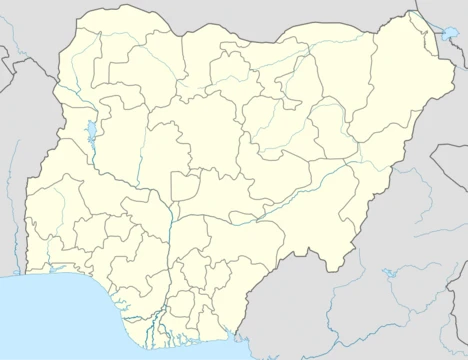
Imo State
A southeastern Nigerian state with high human development.

Wikipedia / Wikimedia Commons
Imo State is a state in the South-East geopolitical zone of Nigeria, bordered by Anambra, Rivers, and Abia States. It is the third smallest in area among Nigeria's 36 states but the fourteenth most populous, with an estimated population of over 5.4 million as of 2022. The state capital is Owerri, and its slogan is the 'Eastern Heartland.' Imo State has the third highest Human Development Index in Nigeria and consistently ranks as a top performer in literacy and educational attainment.
- Capital
- Owerri
- Area
- approximately 5,100 sq km
- Population
- over 5.4 million (2022 estimate)
- Slogan
- Eastern Heartland
- Major Language
- Igbo (lingua franca) and English
- Key Natural Resources
- crude oil, natural gas, lead, calcium carbonate, zinc, salt, sharp sand
Lore & Background
The area of modern Imo State has been inhabited for thousands of years by southern Igbo people. The Igbo language serves as a lingua franca, alongside English adopted during British colonization. At the start of the 20th century, the British incorporated the area into the Southern Nigeria Protectorate, which later merged into British Nigeria in 1914. The area became a centre of anti-colonial resistance during the Women's War. After Nigeria's independence in 1960, the Imo area was part of the Eastern Region, then East Central State in 1967. During the Nigerian Civil War, present-day Imo formed part of the secessionist Biafran state, with Owerri becoming the Biafran capital in late 1969. The area was captured in early 1970 during Operation Tail-Wind, ending the war. Imo State was officially formed in 1976 during the Murtala Muhammed regime, and its current iteration was created in 1991 when eastern Imo was sectioned off to form Abia State.
Reader's Guide
Imo State is significant for its high human development index and educational attainment, ranking third among Nigerian states. Its economy is heavily dependent on agricultural production, especially palm oil, with minor extraction of crude oil and natural gas. The state has over 163 oil wells and hosts major petroleum companies. However, over-farming and high population density have degraded soil, leading to erosion—over 360 erosion sites exist, with 57 critical. The state has a history of resistance, from the Women's War against British colonial policies to the Otokoto riots of 1996 and participation in the #EndSARS protests in 2020. Despite intermittent unrest, Imo State has a fast-growing population and industrialization. Its geography includes the Niger Delta swamp forests and Cross–Niger transition forests, with rivers such as the Imo, Orashi, and Otamiri, and Oguta Lake. The state's name derives from the Imo River, which flows along its eastern border.
Did You Know?
- Imo State is the third smallest in area among Nigeria's 36 states but the fourteenth most populous.
- The state has over 163 oil wells at more than 12 locations.
- Owerri served as the Biafran capital in late 1969 during the Nigerian Civil War.
- The state's name comes from the Imo River, which flows along its eastern border.
Frequently Asked Questions
What is Imo State?
Imo State is a southeastern Nigerian state located in the South-East geopolitical zone, bordered by Anambra, Rivers, and Abia States. It goes by the slogan 'Eastern Heartland' and functions as a cultural and economic hub for the Igbo-speaking community in that region.
What is Imo State's capital and what is its slogan?
The state capital is Owerri, which serves as the administrative and commercial center. The official slogan is 'Eastern Heartland,' reflecting its central position within the Igbo heartland of southeastern Nigeria.
How large is Imo State and how many people live there?
Spanning roughly 5,100 square kilometers, Imo is the third smallest state by area among Nigeria's 36 states. Despite its compact footprint, it ranks fourteenth in population with an estimated 5.4 million residents as of 2022.
Why does Imo State rank so highly in human development?
Imo holds the third-highest Human Development Index in Nigeria, driven by consistently strong performance in literacy rates and educational attainment. This positions it as a standout performer in human-capital metrics across the country.
What natural resources does Imo State possess?
The state's subsoil yields crude oil, natural gas, lead, calcium carbonate, zinc, salt, and sharp sand. These minerals and hydrocarbons feed both local industry and Nigeria's broader extractive economy.
More in States Of Nigeria 1-20
Spotted an error? Know more?
This is a living reference — every entry is fact-audited, and reader corrections feed straight into our audit queue. Suggest an edit · See this site's audit record