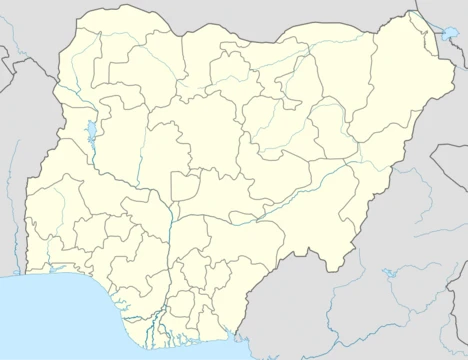
Kogi State
Nigeria's only state bordering ten others, at the Niger-Benue confluence.

Wikipedia / Wikimedia Commons
Kogi State is a state in the North Central region of Nigeria, formed on 27 August 1991 from parts of Benue State, Niger State, and Kwara State. It is the only state in Nigeria to border ten other states and is nicknamed the 'Confluence State' because the confluence of the River Niger and the River Benue occurs next to its capital, Lokoja.
- Founded
- 27 August 1991
- Capital
- Lokoja
- Area rank
- 13th largest in Nigeria
- Population (2016 est.)
- About 4.5 million
- Nickname
- Confluence State
- Number of bordering states
- 10
- Human Development Index rank
- 9th highest in Nigeria
Lore & Background
Kogi State has been inhabited for years by various ethnic groups, including the Ebira, Gbagyi, Nupe, Oko, Igala, Bassa, and Yoruba (Okun, Ogori, Oworo, Magongo). In the pre-colonial period, the area was split between states such as the Nupe Kingdom and the Igala Kingdom. The Fulani jihad annexed the Nupe Kingdom in the early 1800s, placing it under the Sokoto Caliphate. British expeditions occupied the area in the 1900s and 1910s, incorporating it into the Northern Nigeria Protectorate with Lokoja as its capital until 1903. The protectorate later merged into British Nigeria, which became independent as Nigeria in 1960. Modern Kogi State was part of the post-independence Northern Region until 1967, then part of North-Western State, Kwara State, and Benue-Plateau State, before being formed from western Benue State, southeastern Kwara State, and far southern Niger State in 1991.
Reader's Guide
Kogi State is significant as the only Nigerian state to border ten other states, making it a crucial geographic and transport hub connecting the Federal Capital Territory with 22 southern states. Its capital, Lokoja, is historically notable as the place where the name 'Nigeria' was coined by Flora Shaw. The state's economy is largely based on agriculture (coffee, cashew, groundnut, cocoa, oil palm, yam), transport services, logistics, crude oil extraction, and livestock herding. Kogi has the ninth highest Human Development Index and sixteenth highest GDP in Nigeria. The state has experienced severe flooding, notably in 2012 and October 2022, which caused widespread displacement and damage. Its religious diversity—with about 45% Muslim, 40% Christian, and 15% traditional ethnic religions—and multi-ethnic composition reflect its complex history. Tourist attractions include the confluence of Rivers Niger and Benue, Mount Patti, and colonial relics such as Lord Lugard House.
Did You Know?
- Kogi State is the only state in Nigeria that shares a boundary with ten other states.
- The name 'Nigeria' was coined in Lokoja by Flora Shaw while gazing at the River Niger from Mount Patti.
- In October 2022, flooding affected nine local government areas bordering the Niger and Benue rivers.
- The state's nickname 'Confluence State' comes from the meeting of the River Niger and River Benue near its capital, Lokoja.
Frequently Asked Questions
What is Kogi State?
Kogi is a state in Nigeria's North Central zone, created on 27 August 1991 by carving territory out of the former Benue, Niger, and Kwara states. Its capital city is Lokoja.
Why is Kogi State called the 'Confluence State'?
The nickname comes from the fact that the River Niger and the River Benue merge into a single waterway right beside Lokoja, the state's capital. No other Nigerian state has that landmark sitting within its borders.
What makes Kogi State geographically unique among all Nigerian states?
Kogi shares borders with ten other states, a record no other state in the country matches. This gives it a central, hub-like position on the national map.
How big is Kogi State in terms of area and population?
It ranks as the 13th largest state by area in Nigeria and was home to roughly 4.5 million people according to the 2016 estimate.
Why is Kogi State important to Nigeria's geography?
Because of its ten-state border and central North Central location, Kogi acts as a crossroads linking multiple neighboring zones. The Niger-Benue confluence beside Lokoja also gives the state a distinctive symbolic identity in the country's landscape.
More in States Of Nigeria 1-20
Spotted an error? Know more?
This is a living reference — every entry is fact-audited, and reader corrections feed straight into our audit queue. Suggest an edit · See this site's audit record