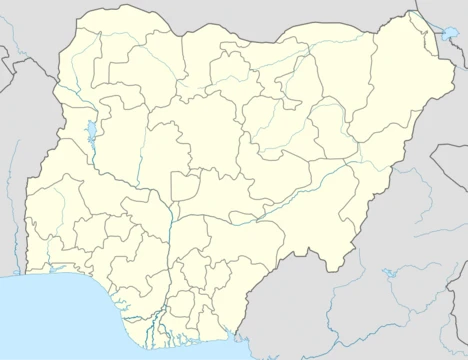
Jigawa State
A northwestern Nigerian state with Neolithic cave art and Sharia law.

Wikipedia / Wikimedia Commons
Jigawa State is a state in Nigeria, located in the North-west region. It was created on 27 August 1991 under the General Ibrahim Babangida military administration, having formerly been part of Kano State. The state capital and largest city is Dutse. Jigawa is notable for its Neolithic cave paintings at Dutsen Habude in Birnin Kudu and for containing the traditional Hausa state of Hadejia (formerly Biram).
- Created
- 27 August 1991
- Capital
- Dutse
- Population
- Approximately 3.6 million
- Area
- 22,410 square kilometres
- Major Religions
- Islam (99%), Christianity
- Official Languages
- Hausa, Kanuri, Fula
- Known For
- Dutsen Habude cave paintings, Hadejia as one of the seven true Hausa states
Lore & Background
Jigawa State was carved from the northeastern part of Kano State in 1991. Its residents are predominantly Hausa or Fulani, with a vast majority practicing Islam, and it is one of twelve Nigerian states governed by Sharia law. The state's economy relies heavily on agriculture, though a semi-arid climate and scarcity of arable land have led to outward migration and tensions between farmers and nomadic Fulani herdsmen. The state is prone to perennial floods that damage farmlands, and deforestation contributes to desertification.
Reader's Guide
Jigawa State holds significance as a border state with the Republic of Niger, hosting a free trade zone at Maigatari that facilitates cross-border trade. Its Neolithic cave paintings at Dutsen Habude provide archaeological evidence of human activity dating back to the Neolithic period. The state's population is predominantly rural (90%), with a high fertility rate and a literacy rate of about 37% as of 2002. Access to potable water is over 90%, though only about 63% have high-quality safe drinking water. The state's government is led by a democratically elected governor and a 30-member house of assembly. Jigawa's legacy includes its role in preserving traditional Hausa states and its ongoing challenges with climate change, flooding, and land-use conflicts.
Did You Know?
- Jigawa State was created on 27 August 1991 under the military administration of General Ibrahim Babangida.
- The Dutsen Habude cave paintings in Birnin Kudu date back to the Neolithic period.
- The town of Hadejia (formerly Biram) is one of the traditional 'seven true Hausa states'.
- Jigawa shares a 70 km international border with the Zinder Region of the Republic of Niger.
Frequently Asked Questions
What is Jigawa State?
Jigawa is a state in Nigeria's North-west region, with Dutse serving as both its capital and largest city. It covers roughly 22,410 square kilometres and is home to an estimated 3.6 million residents.
When and how was Jigawa State created?
The state was established on 27 August 1991 under the military administration of General Ibrahim Babangida. It was carved out of the former Kano State to become its own separate administrative entity.
What makes Jigawa State culturally significant?
Jigawa is home to the Neolithic cave paintings at Dutsen Habude in Birnin Kudu, which are among the oldest known rock art in the area. It also encompasses the traditional Hausa state of Hadejia, historically called Biram.
What is the religious makeup of Jigawa State?
Islam is practiced by approximately 99% of the population, making it one of the most religiously homogeneous states in the country. Christianity accounts for the small remaining share of believers.
What languages are spoken in Jigawa State?
Hausa is the primary official language, with Kanuri and Fula also recognized as official languages. This trilingual setup reflects the diverse ethnic communities settled across the state's territory.
More in States Of Nigeria 1-20
Spotted an error? Know more?
This is a living reference — every entry is fact-audited, and reader corrections feed straight into our audit queue. Suggest an edit · See this site's audit record