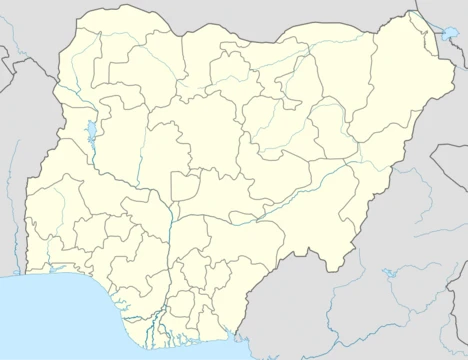
Nasarawa State
North Central Nigerian state formed from Plateau in 1996.
Nasarawa is a state in the North Central region of Nigeria, created on 1 October 1996 from the western part of Plateau State. Named for the historic Nassarawa Emirate, it is the fifteenth largest in area and second least populous among Nigeria's 36 states, with an estimated population of about 2.5 million as of 2016. Its capital is Lafia, while the Karu Urban Area along the western border with the Federal Capital Territory serves as a key economic center.
- Created
- 1 October 1996
- Capital
- Lafia
- Area rank
- 15th largest in Nigeria
- Population (2016 est.)
- About 2.5 million
- Population rank
- Second least populous
- Major religions
- Islam and Christianity
- Key economic activity
- Agriculture (sesame, soybeans, groundnut, millet, maize, yam)
Lore & Background
In the pre-colonial period, the area now known as Nasarawa State was split among various states, some tiny and village-based, until the early 1800s when the Fulani jihad annexed the region under the Sokoto Caliphate as vassal states of Keffi, Lafia, and Nassarawa. British expeditions occupied the area in the 1890s and 1900s, incorporating it into the Northern Nigeria Protectorate, which later merged into British Nigeria in 1914 before independence as Nigeria in 1960. The territory was part of the Northern Region, then Benue-Plateau State (1967), then Plateau State (1976), until western Plateau was broken off to form Nasarawa State in 1996.
Reader's Guide
Nasarawa State is significant as a relatively young administrative entity that reflects Nigeria's ongoing federal restructuring. Its creation in 1996 by the Sani Abacha government aimed to bring governance closer to diverse ethnic groups, including the Koro, Eggon, Tiv, Idoma, and Hausa-Fulani, among others. The state's economy relies heavily on agriculture—producing sesame, soybeans, groundnut, millet, maize, and yam—along with livestock herding and services in urban areas. Nasarawa has been beset by violence, notably the ongoing herder–farmer conflict over land rights. Despite this, it holds the nineteenth highest Human Development Index in Nigeria and hosts numerous tertiary institutions, including a federal university and polytechnics. Its natural features include the Farin Ruwa Falls, one of the highest in Africa, and the Benue River forming much of its southern border. The state's religious diversity, with large Muslim and Christian populations, and its mineral resources (salt, baryte, bauxite) add to its regional importance.
Did You Know?
- Nasarawa State was formed from the west of Plateau State on 1 October 1996.
- The state has thirteen local government areas, with its capital in Lafia.
- Farin Ruwa Falls in Wamba Local Government Area is one of the highest falls in Africa.
- The state is the second least populous in Nigeria, with an estimated population of about 2.5 million as of 2016.
Frequently Asked Questions
What is Nasarawa State and where is it located?
Nasarawa is a state in Nigeria's North Central region, taking its name from the historic Nassarawa Emirate. It was officially established on 1 October 1996 after being carved out of the western portion of Plateau State.
What is Nasarawa State's capital and main economic hub?
Lafia serves as the state capital, while the Karu Urban Area along the western border with the Federal Capital Territory acts as a key economic center for the region.
How big is Nasarawa State in terms of area and population?
It is the fifteenth largest state by land area in Nigeria yet ranks as the second least populous, with an estimated resident count of roughly 2.5 million as of 2016.
When was Nasarawa State created and from which territory?
The state came into existence on 1 October 1996, formed specifically from the western part of the then-existing Plateau State.
What major religions are practiced in Nasarawa State?
Islam and Christianity are the two dominant faiths across the state's communities, reflecting the broader religious landscape of Nigeria's North Central zone.
More in States Of Nigeria 1-20
Spotted an error? Know more?
This is a living reference — every entry is fact-audited, and reader corrections feed straight into our audit queue. Suggest an edit · See this site's audit record