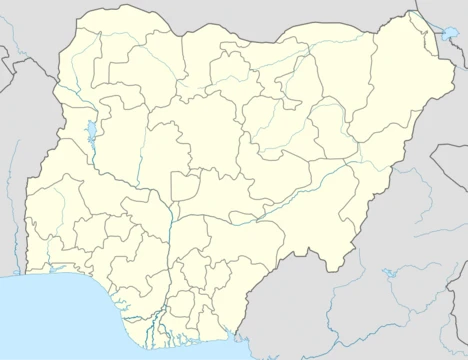
Ogun State
Southwestern Nigerian state, industrial hub, and cultural heartland.
Ogun State is a state in southwestern Nigeria, bordered by Lagos State, the Bight of Benin, Ondo State, Oyo State, Osun State, and the Republic of Benin. Its capital and largest city is Abeokuta, and it is divided into 20 local government areas. Created on 3 February 1976 from part of the former Western State, Ogun is a major industrial hub and the second most industrialized state after Lagos, with a growing base of factories and companies, particularly along the Lagos–Ibadan Expressway corridor.
- Capital
- Abeokuta
- Population (2020 est.)
- 6.4 million
- Area rank
- 24th largest of 36 states
- GDP rank
- 8th highest in Nigeria
- Major ethnic group
- Yoruba (including Awori, Egba, Ijebu, Yewa)
- Major religions
- Christianity (majority), significant Muslim minority
- Date of creation
- 3 February 1976
Lore & Background
Historically, parts of modern Ogun State were included in the Benin, Ijebu, and Oyo kingdoms. In the late nineteenth century, British expeditions took control, and Abeokuta became a major center of missionary activity and education. During the colonial period, the area was part of the Southern Nigeria Protectorate, later merging into colonial Nigeria. After independence in 1960, the region was part of the Western Region until the creation of Ogun State in 1976.
In pre-colonial times, the western portion inhabited by the Egba and Yewa people belonged to the kingdom of Oyo, which sank into civil war in the mid-1800s. Today's Ogun became part of the Protectorate of Lagos in 1893, later of the Protectorate of Yorubaland, and in 1906 of the Protectorate of Southern Nigeria. In 1899, it received a railway connection to Lagos, the 'Boat Express,' connecting the region with the wider world.
In the 1930s, Ogun was a center of the Nigerian women's movement under Funmilayo Ransome-Kuti. After independence, the Yoruba region, and Ogun in particular, was engulfed in conflict between the Ọbáfẹ́mi Awólọ́wọ̀ and Samuel Ládòkè Akíntọ́lá factions of the Action Group party. The state was formed on 3 February 1976 from part of the former Western State.
Reader's Guide
Ogun State holds significance as a major industrial and agricultural hub in Nigeria, with the second highest concentration of industries after Lagos State and one of the lowest incidences of extreme poverty (around 5% of the population against a national average of 31%) according to World Bank data from 2018. The state is the largest producer of kolanut in Nigeria and hosts major companies including Dangote Cement, Nestle, Lafarge, Procter & Gamble, and the only plant in West Africa that manufactures, maintains, and repairs railway vehicles, located in Kajola. Ogun also produces armoured vehicles and drones for the security sector.
Culturally, Ogun is the center for metalworking in Nigeria, reflecting the Yoruba god Ogun, the orisha of metalworking. The state is known for its cultural heritage, crafts, textile traditions, and arts. Demographically, the Yoruba people are the largest ethnic group, with subgroups including Awori, Egba, Ijebu, and Yewa, alongside smaller groups and indigenous Egun people along the border with Benin. The state has a tropical wet and dry climate, with the Ogun and Yewa rivers as major waterways, and the Omo Forest Reserve is an important conservation area home to Nigeria-Cameroon chimpanzees and African forest elephants.
Did You Know?
- Ogun State is the second most industrialized state in Nigeria after Lagos State.
- The state has one of the lowest incidences of extreme poverty in Nigeria, at about 5% of the population against a national average of 31%.
- Ogun State is the largest producer of kolanut in Nigeria.
- The wagon assembly plant in Kajola is the only plant in West Africa that manufactures, maintains, and repairs railway vehicles.
Frequently Asked Questions
What is Ogun State and where is its capital?
Ogun State is a southwestern Nigerian state whose capital and largest city is Abeokuta. It is home to roughly 6.4 million residents spread across 20 local government areas, with the Yoruba people forming the dominant ethnic group.
Where is Ogun State located and what borders it?
Ogun sits in the southwest of Nigeria, sharing boundaries with Lagos, Ondo, Oyo, and Osun states, as well as the Republic of Benin and the Bight of Benin coastline. It ranks 24th in area among Nigeria's 36 states.
Why is Ogun State considered an industrial hub?
Ogun is Nigeria's second most industrialized state after Lagos, hosting a dense cluster of factories and companies, especially along the Lagos–Ibadan Expressway corridor. Its GDP ranks 8th highest in the country, underscoring its economic weight.
When was Ogun State created?
Ogun was carved out of the former Western State on 3 February 1976. Since then it has grown into a major industrial and cultural hub in the Yoruba heartland.
What religions and ethnic groups are prominent in Ogun State?
Christianity is the majority faith, with a significant Muslim minority also present. The population is predominantly Yoruba, including sub-groups such as the Awori, Egba, Ijebu, and Yewa.
More in States Of Nigeria 1-20
Spotted an error? Know more?
This is a living reference — every entry is fact-audited, and reader corrections feed straight into our audit queue. Suggest an edit · See this site's audit record