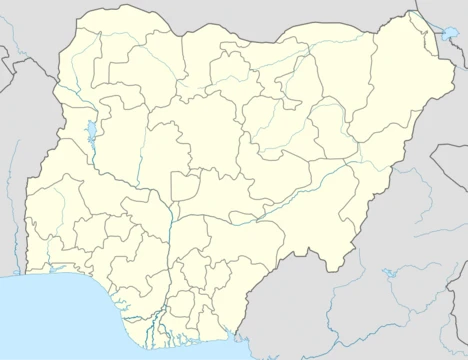
Kebbi State
A northwestern Nigerian state known for fishing and agriculture.

Wikipedia / Wikimedia Commons
Kebbi State is a state in northwestern Nigeria, bordered to the east and north by Sokoto and Zamfara states, to the south by Niger State, and to the west by the national borders with Benin Republic and Niger. Named for its capital and largest city, Birnin Kebbi, it was formed from a part of Sokoto State on 27 August 1991. Of Nigeria's 36 states, Kebbi is the tenth largest in area and 17th most populous, with an estimated population of about 6 million as of 2023. The state is significant for its pre-colonial history as part of the Kebbi Kingdom, a Hausa Banza bakwai state, and for its resistance to the Fulani jihad, later becoming a center of agriculture and fishing, notably hosting the massive Argungu Fishing Festival.
- Capital
- Birnin Kebbi
- Created
- 27 August 1991
- Area Rank
- 10th largest in Nigeria
- Population (2023 est.)
- ~6 million
- Major Religions
- Islam (~84%), Christianity and traditional religions
- Key Economic Activities
- Fishing, agriculture (sorghum, groundnuts, millet, onions, rice), livestock herding, trading
- Notable Feature
- Lowest Human Development Index in Nigeria
Lore & Background
In the pre-colonial period, the area now known as Kebbi State was mainly controlled by the Kebbi Kingdom, a Hausa Banza bakwai state, until the early 1800s when Fulani jihadists seized part of the area and attempted to incorporate it into the Gwandu Emirate under the Sokoto Caliphate. Over the next century, Kebbi rulers fought Sokoto on-and-off until the 1900s and 1910s, when the British seized control as part of the Northern Nigeria Protectorate, which later merged into British Nigeria before becoming independent as Nigeria in 1960. Originally part of the post-independence Northern Region, the area became part of the North-Western State in 1967, then Sokoto State in 1976, until a group of LGAs in Sokoto's west and south was broken off to form the new Kebbi State in 1991.
Reader's Guide
Kebbi State holds historical importance as the homeland of the Kebbi Kingdom, a Hausa Banza bakwai state that resisted the Fulani jihad in the early 19th century, though the area later largely converted to Islam through peaceful means. Its creation in 1991 from Sokoto State reflects Nigeria's ongoing administrative reorganization. Economically, Kebbi is largely based on fishing and agriculture, particularly rice, and hosts the Argungu Fishing Festival, which exhibits numerous fish species and attracts attention to the state's natural resources. The state has the lowest Human Development Index and sixth lowest GDP in Nigeria, highlighting developmental challenges. Ethnically diverse, with Fulani, Hausa, Zarma, and other groups, Kebbi's religious majority is Muslim, with Christian and traditional minorities. Its geography includes the Sokoto River and part of the Niger River, supporting its agricultural base.
Did You Know?
- Kebbi State was formed from a part of Sokoto State on 27 August 1991.
- The state is named after the city of Birnin Kebbi, its capital and largest city.
- Kebbi has the lowest Human Development Index in Nigeria.
- The Argungu Fishing Festival features hippopotamus, West African manatee, and transient African bush elephant populations.
Frequently Asked Questions
Who is Kebbi State?
Kebbi State is a northwestern Nigerian state centered on its capital and largest city, Birnin Kebbi. It sits at the western edge of the country, sharing international borders with both Benin Republic and Niger, while Sokoto, Zamfara, and Niger states surround it on the other sides.
What are Kebbi State's powers/role?
The state's economic engine is built on fishing, livestock herding, and cultivating crops such as sorghum, groundnuts, millet, onions, and rice. Its dual-border position also makes it a natural corridor for cross-border trade with its two neighboring countries.
How does Kebbi State's story end?
Because Kebbi is a living political entity rather than a finished narrative, its 'ending' is still being written. As of 2023 it supports roughly six million residents and continues to evolve as one of Nigeria's 36 states.
Why is Kebbi State important?
Kebbi carries a deep pre-colonial legacy as part of the Kebbi Kingdom, one of the Hausa Banza Bakwai states, and is also remembered for its historical resistance. In the present day it remains a key agricultural and fishing hub in northwestern Nigeria.
When and how was Kebbi State created?
Kebbi was separated from Sokoto State and officially inaugurated on 27 August 1991. It takes its name from Birnin Kebbi, the city that serves as both its capital and its most populous urban center.
More in States Of Nigeria 1-20
Spotted an error? Know more?
This is a living reference — every entry is fact-audited, and reader corrections feed straight into our audit queue. Suggest an edit · See this site's audit record