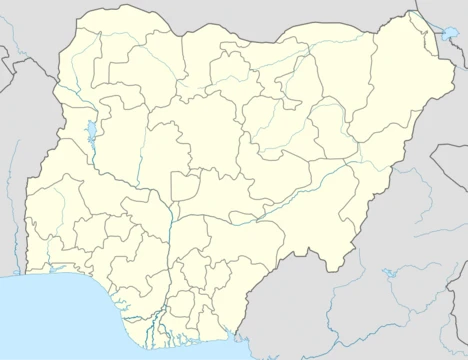
Plateau State
A Nigerian state known for its plateau, climate, and tin mining.
Plateau State, in Nigeria’s North Central geopolitical zone, has Jos as its capital. Its official nickname is the "Home of Peace and Tourism," and it is home to roughly 4.7 million people. The state sits on the high-altitude Jos Plateau, which gives it a near-temperate climate—average temperatures range from 13 to 22 °C—and makes it the source of several major rivers in northern Nigeria, including the Kaduna, Gongola, Hadeja, and Damaturu.
The state’s geography is defined by hills, bare rock formations, and grasslands. Elevation varies from about 1,200 metres to a peak of 1,829 metres in the Shere Hills near Jos. Plateau State borders Bauchi to the northeast (360 km), Kaduna to the northwest, Nasarawa to the southwest (219 km), and Taraba to the southeast (202 km). Though in the tropics, the altitude moderates the climate: the coldest months are December to February during the Harmattan, and the warmest are March and April. Annual rainfall ranges from 1,317 mm in the south to 1,460 mm on the plateau, with July and August being the wettest. The cooler conditions reduce the prevalence of tropical diseases like malaria.
Geologically, the Jos Plateau is formed by younger granite (about 160 million years old) intruding older granite, creating mushroom-shaped hillocks and scattered boulders. Volcanic activity 50 million years ago left behind volcanoes, basaltic plateaus, deep valleys, and smooth pediments. Decades of tin and columbite mining have carved deep gorges and lakes into the landscape.
Tourism, despite the official nickname, struggles due to security issues and government neglect, but natural attractions still draw visitors, mostly from within Nigeria. The Wildlife Safari Park covers 8 km² of savanna, 4 km from Jos. The National Museum in Jos, founded in 1952, is known for its archaeology and pottery, including Nok terracotta heads from 500 BC to 200 AD. Next door, the Museum of Traditional Nigerian Architecture displays life-size replicas of buildings, from Kano’s walls to a Tiv village, plus colonial railway and tin-mining artifacts. Solomon Lar Amusement Park in Jos is named after a former governor. Jos Zoo, established in 1957, houses animals, birds, and reptiles. Assop Falls, 64 km from Jos on the road to Abuja, is a notable waterfall used in films and ads. Kurra Falls, 77 km southeast of Jos, hosts the state’s first hydroelectric station. Wase Ro
- capital
- Jos
- population
- around 4.7 million
- nickname
- Home of Peace and Tourism
- geopolitical_zone
- North Central
- altitude_range
- 1,200 m to 1,829 m above sea level
- average_temperature
- 13 to 22 °C
Lore & Background
Plateau State has experienced significant 21st-century violence, including riots, bombings, and clashes between ethnic and religious groups. Conflicts involve jihadist insurgents like Boko Haram, tensions between Muslim Hausa-Fulani herders and predominantly Christian farmers, and attacks by Christian militias and other armed groups. In June 2018, ethnic violence in Jos resulted in 86 deaths; Christian Solidarity Worldwide reported 238 killed in a single weekend that month and 1,061 in the first three months of 2018. Fulani communities have also suffered attacks, and in January 2024 a senior military officer and several soldiers were killed. Analysts cite climate change, land competition, and political instability as factors.
Reader's Guide
Plateau State holds significance as a region shaped by colonial tin mining and subsequent border adjustments, reflecting Nigeria's administrative evolution. Its high altitude provides a near-temperate climate and reduces incidence of tropical diseases like malaria, while its geology yields diverse mineral resources. The state's tourism potential, though hampered by security issues and government failure, includes attractions such as the Wildlife Safari Park, National Museum with Nok terracotta artefacts, Assop Falls, Wase Rock (one of only five white pelican breeding sites in Africa), and the Shere Hills. However, the state's legacy is deeply marked by 21st-century conflicts involving multiple actors—jihadist groups, herder-farmer tensions, and communal militias—resulting in hundreds of deaths and ongoing instability. The complexity of these conflicts, with attacks and reprisals from both Muslim and Christian communities, underscores the interplay of ethnic, religious, environmental, and political factors. The state government, led by Governor Caleb Manasseh Mutfwang since May 2023, continues to address these challenges.
Did You Know?
- Plateau State's altitude ranges from about 1,200 metres to a peak of 1,829 metres in the Shere Hills.
- The Jos Plateau is the source of many rivers in northern Nigeria, including the Kaduna, Gongola, Hadeja, and Damaturu rivers.
- Wase Rock is one of only five breeding sites of the white pelican in Africa.
- Tin mining activities in Plateau State began in 1902 under the British and continue to the present day.
More in States Of Nigeria 1-20
Spotted an error? Know more?
This is a living reference — every entry is fact-audited, and reader corrections feed straight into our audit queue. Suggest an edit · See this site's audit record