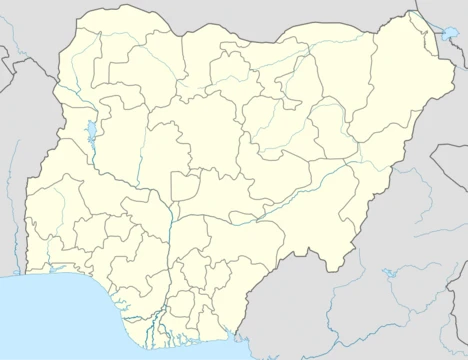
Rivers State
Niger Delta state formed in 1967, oil industry hub.
Rivers State is a state in the Niger Delta region of southern Nigeria, formed on 27 May 1967. It is named after the many rivers that border its territory and is considered the commercial center of the Nigerian oil industry, with its capital being Port Harcourt. The state is noted for its linguistic diversity, with 30 Indigenous languages and dialects spoken, and is home to ethnic groups including Ikwerre, Degema, Ijaw, Ogoni, Ogba, Ekpeye, and Kalabari.
- formed
- 27 May 1967
- capital
- Port Harcourt
- population_2006_census
- 5,198,716
- estimated_population_2024
- 9,898,470
- area
- 11,077 km² (4,277 sq mi)
- nationality
- Nigeria
- known_for
- Petroleum industry and linguistic diversity
Lore & Background
Rivers State was part of the Oil Rivers Protectorate from 1885 to 1893, then the Niger Coast Protectorate, and in 1900 merged with Royal Niger Company territories to form Southern Nigeria. The state was created in 1967 with the split of the Eastern Region of Nigeria. In 1996, it lost territory to form Bayelsa State. During the colonial period, protection treaties were signed between indigenous communities and the British. Agitation for a Rivers Province began between 1941 and 1952 with the Ijo Rivers People's League, followed by the Council of Rivers Chiefs in 1953 and the Calabar Ogoja Rivers (COR) State Movement. The Willink Commission led to the Niger Delta Development Board, which failed to meet expectations. In February 1966, Isaac Boro, Sam Owonaro, and Nottingham Dick proclaimed a 'Delta People's Republic,' which lasted twelve days before being suppressed.
Reader's Guide
Rivers State's significance lies in its role as the commercial center of Nigeria's oil industry, which dominates its economy. However, mismanagement and corruption have prevented rapid development and meaningful poverty reduction. The state is one of the fastest-growing in terms of modern infrastructure and urbanization, having recently commissioned about ten flyovers. Its geography is dominated by rivers, including the Bonny River, and its terrain includes freshwater swamps, mangrove swamps, and coastal sand ridges. The state's biodiversity is notable, with Finima Nature Park on Bonny Island serving as a protected area. The creation of Bayelsa State in 1996 reflected ongoing complaints about political marginalization and environmental degradation among Ijaw groups. Rivers State remains a key region in Nigeria's economic and environmental landscape.
Did You Know?
- Rivers State is the 4th most populous state in Nigeria, with an estimated population of 9,898,470 in 2024.
- The state is home to 30 Indigenous languages and dialects, including Ikwerre, Ogba, Ekpeye, Igbo, Ijaw, and Ogoni.
- Rivers State lost territory in 1996 to form Bayelsa State.
- The state's capital, Port Harcourt, is considered the commercial center of the Nigerian oil industry.
More in States Of Nigeria 1-20
Spotted an error? Know more?
This is a living reference — every entry is fact-audited, and reader corrections feed straight into our audit queue. Suggest an edit · See this site's audit record