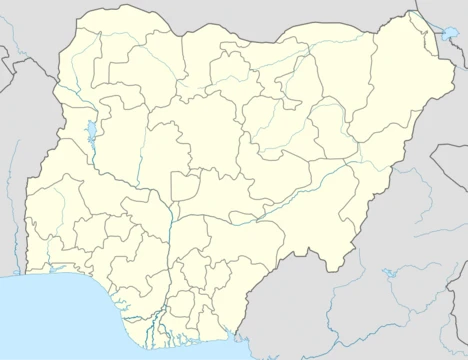
Sokoto State
Northwestern Nigerian state, seat of the Sokoto Caliphate.
Sokoto State is one of the 36 states of Nigeria, located in the extreme northwest of the country. It is bounded by the Republic of the Niger to the north and west, and the states of Zamfara and Kebbi. Its capital and largest city is Sokoto, which is near the confluence of the Sokoto and Rima rivers. As of 2022, the state has an estimated population of more than 6.3 million. Being the seat of the former Sokoto Caliphate, the city is predominantly Muslim and an important center of Islamic learning in Nigeria, with the Sultan as the spiritual leader of Nigerian Muslims.
- Capital
- Sokoto
- Population (2022 est.)
- More than 6.3 million
- Area
- 90,000 square kilometres (35,000 sq mi) as a province circa 1900
- Major Languages
- Hausa and Fulfulde
- Religion
- Predominantly Sunni Muslim with a Shia minority
- Statehood
- Created in 1976 from the bifurcation of the North-Western State
Lore & Background
Sokoto State was created in 1976 from the bifurcation of the erstwhile North-Western State into Sokoto and Niger States. Since then, it has been ruled by governors, most of whom were ex-military officers, succeeding each other at short intervals. The region has a longer history: during the Fulani Empire in the 19th century, Sokoto was an important Fula state. From around 1900, with the British takeover, Sokoto became a province of the British protectorate of Nigeria, later including Gando as a sub-province, covering 90,000 square kilometres with an estimated population over 500,000.
Reader's Guide
Sokoto State is significant as the seat of the former Sokoto Caliphate, making it a key center of Islamic learning and spiritual leadership in Nigeria. The Sultan, who heads the caliphate, is effectively the spiritual leader of Nigerian Muslims. The state's economy is dominated by agriculture, employing a majority of the working population, yet it is one of the poorest in Nigeria with one of the highest incidences of extreme poverty (around 80% of the population) according to 2018 World Bank data. The state is in the dry Sahel, with an annual average temperature of 28.3°C, and its lifeline for crops is the floodplains of the Sokoto-Rima river system. The population is mainly Hausa and Fulani, with Hausa and Fulfulde as dominant languages. The state has produced several tertiary institutions, including Usman Danfodio University.
Did You Know?
- The name Sokoto is of Arabic origin, representing suk, meaning 'market'.
- In 1906, a rising attributed to religious fanaticism occurred near Sokoto, and the leader was executed in the market place of Sokoto.
- Over 80% of people living in Sokoto State practice agriculture.
- The state is bounded by the Republic of the Niger for 363 km (226 miles).
More in States Of Nigeria 1-20
Spotted an error? Know more?
This is a living reference — every entry is fact-audited, and reader corrections feed straight into our audit queue. Suggest an edit · See this site's audit record