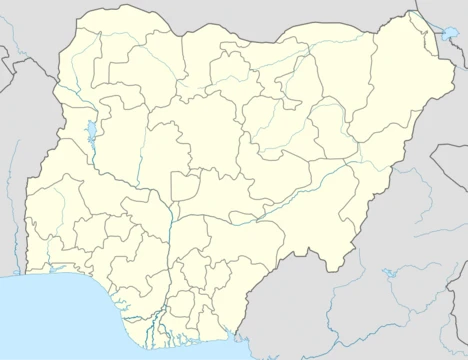
Taraba State
A north-eastern Nigerian state with diverse ethnicities and rich natural resources.
Taraba is a state in northeastern Nigeria, taking its name from the Taraba River that flows through its southern region. Known as "Nature's Gift to the Nation," its capital is Jalingo. The state is remarkably diverse, with around 80 distinct ethnic groups and their languages.
The state was formed on August 27, 1991, carved out of the former Gongola state by the military regime of General Ibrahim Badamasi Babangida. It brought together three former divisions: Wukari, Mambilla, and Muri.
Taraba shares borders with Nasarawa and Benue states to the west (109 km), Plateau state to the northwest (202 km), Bauchi (54 km) and Gombe (58 km) to the north, Adamawa state to the northeast (about 366 km), and the Northwest Region of Cameroon to the south (about 525 km). Its main rivers—the Benue, Donga, and Taraba—originate in the Cameroonian mountains, draining nearly the entire state northward before turning west to join the Niger River.
The climate features an average annual temperature of 33°C, with the hottest months being March and April, when highs average 40.44°C. The state receives about 100.64 millimeters of rainfall per year, with increased rain around August, and an average relative humidity of 54.98%. In April 2023, flooding affected many homes and commercial buildings in the state.
Taraba is divided into 16 Local Government Areas (LGAs): Ardo Kola, Bali, Donga, Gashaka, Gassol, Ibi, Jalingo, Karim Lamido, Kurmi, Lau, Sardauna, Takum, Ussa, Wukari, Yorro, and Zing. The state government is led by a democratically elected governor and a House of Assembly, with the capital in Jalingo. The governor is chosen through a modified two-round system: a candidate must win a plurality of votes and secure over 25% of votes in at least two-thirds of the state's LGAs; otherwise, a runoff is held between the top two candidates.
Healthcare facilities include Courage Hospital, Federal Medical Centre (FMC), Gateway Hospital, General Hospital Bali, Sauki Hospital and Maternity, Totus Hospital and Maternity, Albert Healthcare Company, Federal University Teaching Hospital Wukari, Taraba Specialist Hospital, Kwararafa Hospital and Maternity, Federal Polytechnic Bali Medical Centre, First Referral Hospital, and Biyama Hospital.
Languages spoken across the state, listed by LGA, include Akum, Bukwen, Esimbi, Fali of Baissa, Jiba, Njerep, Tha, Yandang, Yotti, and Ywom. The primar
- Created
- 27 August 1991
- Capital
- Jalingo
- Nickname
- Nature's Gift to the Nation
- Number of Local Government Areas
- 16
- Annual average temperature
- 33°C
- Annual average rainfall
- 100.64 mm
- Major rivers
- Benue, Donga, Taraba
Lore & Background
Taraba state is bordered on the west by Nasarawa state and Benue state for 109 km, northwest by Plateau state for 202 km, north by Bauchi state for 54 km and Gombe state for 58 km, northeast by Adamawa state for about 366 km and south by Northwest Region in Cameroon for about 525 km. The main rivers—Benue, Donga, and Taraba—begin in the Cameroonian mountains, draining almost the entire length of the state on their way north before heading west to link up with the Niger River. The state has an annual average temperature of 33°C, receives 100.64 millimetres of rainfall a year, with increased rainfall around August, and has an average relative humidity of 54.98%. It is hottest in March and April with an average high of 40.44°C.
Reader's Guide
Taraba state's significance lies in its role as a major agricultural hub in Nigeria, with cash crops including coffee, tea, groundnuts, and cotton, as well as staple crops like maize, rice, sorghum, millet, cassava, and yam produced in commercial quantity. Livestock rearing, especially cattle, sheep, and goats, is extensive on the Mambilla Plateau and along the Benue and Taraba valleys. The state also possesses abundant natural resources for industrial and commercial use, including mineral raw materials such as barytes, bauxites, graphite, limestone, gypsum, kaoline, feldspar, mica, pyrite, uranium, and gemstone. Its cultural heritage is reflected in festivals like the Karimjo Abedahh festival and Nwunyu fishing festival in Ibi, as well as the Purma of the Chamba, Tagba of Acha People, and Kuchecheb of Kutebs. The state encompasses part of the Mambilla Region, considered the Bantu cradle, occupied for approximately five millennia. Notable people from Taraba include former Nigerian Minister of Women Affairs Aisha Alhassan, retired General Theophilus Danjuma, and former Chief Justice of Nigeria Mahmud Mohammed.
Did You Know?
- Taraba state was created on 27 August 1991 from the former Gongola state.
- The state is named after the Taraba River, which traverses its southern part.
- Taraba has about 80 distinct ethnicities and their languages.
- The state is bordered to the south by the Northwest Region in Cameroon for about 525 km.
More in States Of Nigeria 1-20
Spotted an error? Know more?
This is a living reference — every entry is fact-audited, and reader corrections feed straight into our audit queue. Suggest an edit · See this site's audit record